 Higher Taxes that Promote Development
|
Saving Communities
|
||||||
Home |
Site Map |
Index
|
New Pages |
Contacts |
REAL ESTATE/GURNEY BRECKENFELD
RESEARCH ASSOCIATE
Edward C. Baig
FORTUNE, August 8, 1983, pp 68-71
Reprints
available from the Robert Schalkenbach Foundation with
permission of Fortune Magazine.
(C) 1983 Time Inc. All rights reserved.
Inset story: AN
IDEA THAT REFUSED TO DIE
HIGHER TAXES
THAT PROMOTE
DEVELOPMENT
THAT PROMOTE
DEVELOPMENT
A venerable but controversial reform idea in real estate taxation - taxing land much more heavily than buildings - is undergoing a portentous test in Pennsylvania. Five cities have increased their tax rates on land to as much as five times those on strubctures, a striking contrast with the customary 1-to-1 ratio. The results so far are promising enough to raise hope that more localities will use similar antidotes for the economic poison hidden in conventional property taxation.
The Pennsylvania phenomenon bears witness to a durable condition in democracies: the slow contagion of good ideas. The five cities - Pittsburgh, Scranton, Harrisburg, McKeesport, and New Castle - are engaged in the largest U.S. effort yet to take advantage of a proposition advanced 104 years ago by Henry George, the Philadelphia-born economist and land reformer (see box, page 70). Analyzing why the greatly increasing wealth spawned by the Industrial Revolution had failed to eradicate poverty, George argued that the main reason was undertaxation of land, which enabled landowners to pocket vast unearned income at the expense of both capital and labor. He won a legion of ardent followers by proposing that governments raise their entire revenues by increasing taxes on land and abolishing all other taxes.

PITTSBURGH AND SCRANTON have been enjoying at least a few nuggets for nearly 70 years. In 1913 Pennsylvania passed a split-rate tax law at the behest of a bipartisan civic reform movement in Pittsburgh that required the two cities to phase in a tax rate on land double the rate on buildings. Along with companion legislation adopted in 1911, the split-tax law ended a notorious tax rip-off in Pittsburgh. Land classified "urban" was assessed at 100% of market value, while land classified "rural" was assessed at two-thirds of market value and land classified "agricultural" was assessed at half its real worth. The arrangement enabled wealthy owners of large estates to keep most of the city's idle acreage off the market, creating an artificial shortage of land and inflating rents for workers and business alike. Reflecting a durable consensus view, David L. Lawrence, long Pittsburgh's mayor and later governor of Pennsylvania, said of the split-rate tax: "There is no doubt in my mind that the tax law has been a good thing for Pittsburgh. It has discouraged holding vacant land for speculation and provides an incentive for building improvements."
Still, that 2-to-1 ratio was only a timid dose of George's prescription that all real estate taxes be levied against the value of the land. Moreover, the state's split-tax law applies only to the city share of real estate taxes. School districts and counties continue to tax land and buildings at a 1-to-1 rate. The impact of the split-tax law has become increasingly diluted as schools have grabbed a larger and larger share of total property taxes. In Scranton, for example, schools today get 58 cents of every real-estate-tax dollar collected inside the city. In recent years the city has raised land taxes so high that they amount to $3.76 for each $1 of taxes on buildings. But school and county taxes reduce the overall ratio to only $1.77 of land taxes for each $1 of building taxes.
A few Pennsylvania lawmakers have been struggling unsuccessfully for several years to get the legislature to broaden the split-tax law to include counties and school districts. Of this impasse, John M. Kelly, a lanky, white-thatched Scranton real estate broker who is among his area's most effective advocates of higher land taxes, observes wryly: "The more logical an idea, the less likely it is to survive in a U.S. legislature."
The current phase of rising land taxes began after Pittsburgh, Scranton, and McKeesport got home-rule charters in the early 1970s enabling them to set any mix of tax rates they liked. Harrisburg and New Castle acted under another state law. The differential tax rates helped foster a spurt in construction and development or, as in New Castle (pop. 33,400), helped minimize a decline in such activity. Most cities in western Pennsylvania hive been clobbered by the depression in the steel industry, but construction hasn't declined nearly as much in New Castle as it has in neighboring Sharon and Butler.
Pittsburgh raised its tax rate on land from 4.95% to 9.85% of assessed valuation in 1979, while leaving the rate on buildings at 2.475%. New construction, measured by the dollar value of building permits issued, rose 14% as compared with the 1977-78 average. In 1980 the city widened the differential still more, to a tax rate of 12.55% on land vs. the 2.475% building rate, a ratio of 5.07 to 1. (With Allegheny County and school taxes added in, the final ratio was 2.99 to 1.) Construction in 1980 leaped 212% above the 1977-78 average, reflecting groundbreaking for a new crop of office skyscrapers that is giving the city its so-called second renaissance (the first came in the 1950s with the redevelopment of the Golden Triangle). The adoption in 1980 of three-year tax exemptions on all new buildings - but not the land - also boosted construction. In 1981 construction peaked at nearly six times the 1977-78 rate.
Some of the dozen new office towers that gone up in Pittsburgh would have been built with or without tax concessions; downtown office space had been growing scarce. But the widening differential between the taxes on buildings and land undoubtedly helped. It cut the annual bill for owners of some skyscrapers by more than $500,000 a year when compared with conventional 1-to-1-ratio taxation.
THE INCREASES in land taxes have drawn some opposition in Pittsburgh. Mayor Richard S. Caliguiri, a Democrat who took office in 1977, has declared himself a foe of the higher levies. "I don't see where they help at all," he says. For 1979 and 1980 he proposed raising the city's tax on wages instead of boosting land taxes, but was overridden by the city council. The tax rates for 1982 rose to 13.3% on land and 3.2% on buildings. Last year Caliguiri allowed a further increase in the land tax to 15.15%, accompanied by a small decrease in the building tax to 2.7%.
In contrast, the mayor of Scranton, rotund James B. McNulty, proposed last fall that his city move all the way to full land-value taxation and eliminate taxes on buildings altogether. Scranton's tax rates have been 9.6% on land and 2.55% on buildings since 1980. Despite his conviction that taxing buildings at the present rate deters development and redevelopment, McNulty quickly put his proposal on hold. Downtown merchants angrily complained that the change would be unfair because of the real estate assessments on which property taxes are calculated. The assessments, set by Lackawanna County, are decades out of date. As a result, the city's only surviving downtown department store, The Globe, pays 222 times as much tax per square foot of land as the newer Viewmont Mall, which straddles the city border on the northwest edge of town. The Globe's downtown land has an assessed value of $26.66 per square foot, while city land beneath the mall, which includes Sears and J.C. Penney stores, has an assessed value of just 12 cents per square foot.
ERRATIC AND UNFAIR property assessments, endemic across the U.S., are particularly egregious in the Keystone State. The U.S. Census Bureau ranks Pennsylvania 49th in assessment accuracy among the 50 states (ahead of Montana). Scranton's assessments are even poorer than most in Pennsylvania. Calculations by researcher Roger Downing at Pennsylvania State University show that in 1981 the average assessment in Lackawanna County missed the intended percentage of market value by 49.9%.
McKeesport (pop. 31,000), 12 miles up the Monongahela River from Pittsburgh, was on the verge of municipal bankruptcy in 1980 when it switched to split-rate real estate taxation and increased its property-tax revenues by more than 50%. The city raised taxes on land from 2.45% to 9% of assessed value, but cut taxes on existing buildings from 2.45% to 2% and granted a three-year tax exemption to all new construction. Neighboring Clairton (pop. 12,200) and Duquesne (pop. 10,100), where steel is also the main industry, left their 1-to-1 real estate tax alone. Compared with the annual average for 1977-79, the dollar value of construction in McKeesport rose by 38% in 1980-82. Clairton suffered a 28% decline, Duquesne a 22% decline.
Steven Cord argues that the Pennsylvania statistics make a compelling case for Georgist tax theory. And they are bolstered, he says, by studies that found similar increases in construction and jobs after more than 1,000 localities in Australia and 300 in South Africa lifted taxes on land. Adds Congressman Coyne: "Our differential tax may provide a vital key to the paramount issue of the day: how to put idle people and idle plants back to work."
Businessmen understandably recoil at the suggestion of tax reform. At the state and local level, "reform" has become virtually synonymous with tax increases. Real estate taxes in particular have grown increasingly unpopular in recent years, and genuine reform remains elusive because people prefer the devil they know to the devil they do not understand. But higher land taxes, especially when accompanied by reduced taxes on structures, look like an idea businessmen ought to embrace and promote. The benefits in the form of more jobs and increasingly compact development are not only lasting, but flow to the whole community.
AN IDEA THAT REFUSED TO DIE |
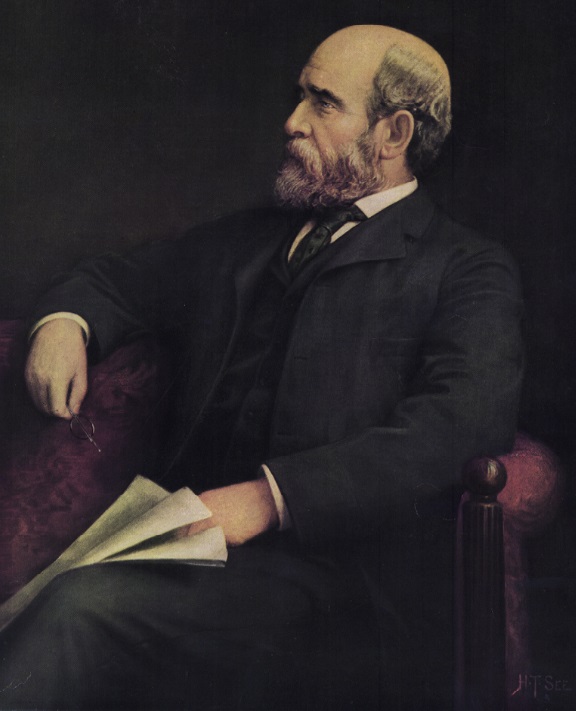 Henry George |
Henry George's masterwork, Progress and Poverty, published in 1879, catapulted him from obscurity to global fame. Translated into 14 languages, including Chinese, the book sold more than four million copies. His ideas won an army of followers who formed a significant though largely unsuccessful force in U.S. politics for about four decades.
George's insight was based on both personal privation and the study of classical economists including Adam Smith, David Ricardo, and John Stuart Mill. Mill put the case for land taxes simply: "The increase in the value of land, arising as it does from the efforts of an entire commununity, should belong to the community, and not to the individual who might hold title." George was born September 2, 1839, in Philadelphia, the son of a customs-house clerk. He went to sea at 16 as a foremast boy on a cargo ship. Returning 14 months later to Philadelphia, he learned to set type but found the pay low and the work unsteady. He went to sea again in 1857, jumped ship in San Francisco, prospected unsuccessfully for gold, and became managing editor of one newspaper and then part owner of another. At times he was so poor that, he later wrote, "I came near starving to death." When his second child was born he had to beg a stranger for $5 for food.
Dismayed at the contrast between the luxury and want around him, George searched for explanations. Riding in the hills near San Francisco, he asked a passing teamster what land there, was worth. Pointing to some grazing cows, the teamster replied: "I don't know exactly, but a man over there will sell some land for $1,000 an acre [an outlandish price in those days]." Wrote George: "Like a flash it came upon me that there was the reason for advancing poverty with advancing wealth. With the growth of population, land grows in value, and the men who work it must pay more for the privilege."
Credit problems closed his newspaper, so George wangled a job as an inspector of gas meters while he labored a year and a half writing Progress and Poverty. After New York publishers rejected the manuscript, George had it printed himself. In 1880, without money or a job, he went to New York City armed with his book and a crusader's confidence.
D.
Appleton & Co., which had rejected the
book as "very aggressive," finally published it. Alfred Russel Wallace,
an English naturalist, called it "the most remarkable and important
book of the century." George attracted wide support among the working
class; among his converts was Samuel Gompers, a founder of the American
Federation of Labor. Largely at the behest of labor, George ran for
mayor of New York in 1886 and outpolled a rising politician named
Theodore Roosevelt, though both lost to the Tammany Hall candidate,
Abram S. Hewitt. George ran again for mayor of New York in 1897, but he
died of apoplexy, at age 58, a few days before the election.
You can order this reprint online for 50¢ from the Robert Schalkenbach Catalog, or, for copies in large quantities, contact:
The Robert Schalkenbach Foundation
41 East 72nd Street
New York, NY 10021
(212) 988-1680
Comments:
Saving Communities
420 29th Street
McKeesport, PA 15132
United States
412.OUR.LAND
412.687.5263